China vs North Korea Military Comparison
Side-by-side military strength: active personnel, defense budgets, air force aircraft, and naval assets.

China
2M active troops
$300B budget
VS
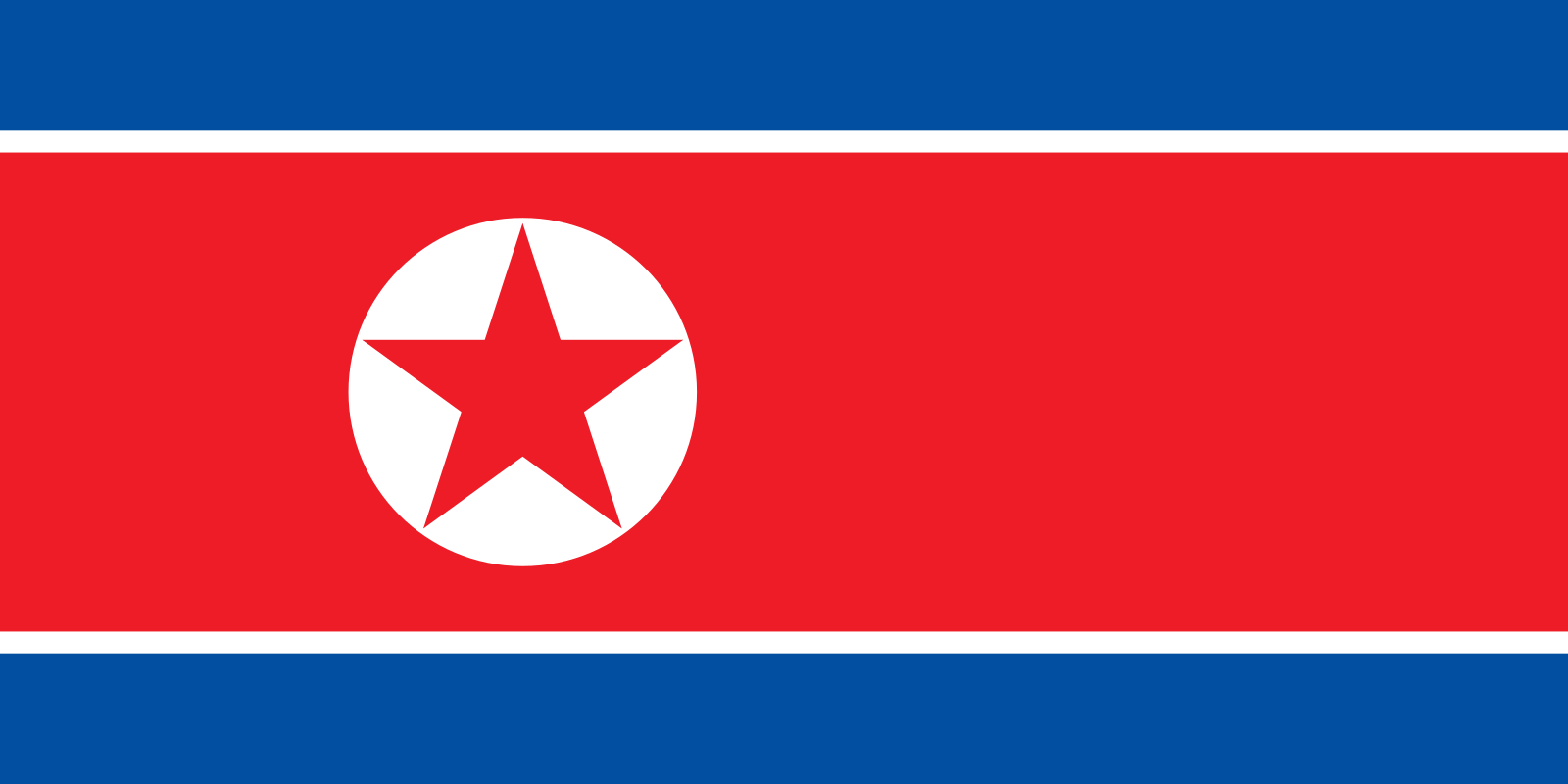
North Korea
1M active troops
$4B budget
5,651
Tanks
5,895
35,000
Armored Vehicles
4,060
10,366
Artillery
7,750
2,430
Rocket Systems
5,000
1,200
Fighter Jets
458
912
Helicopters
21
777
Warships
967
79
Submarines
73
Nuclear Arsenal
China
LARGEST
500
WARHEADS
North Korea
NON-NUCLEAR
0
WARHEADS
Warheads Over Time
Estimated total warhead inventories — Federation of American Scientists / SIPRI
Defense Budget vs GDP
Historical defense spending and how it compares to each country's GDP. The % of GDP view normalises for economic size so smaller economies aren't drowned out by absolute dollar figures.
Defense Budget Over Time ($B)
Defense Budget as % of GDP
Source: World Bank Open Data API (MS.MIL.XPND.CD)
Military Active Personnel
China
LARGEST
2.04M
TROOPS
North Korea
62.9% OF LARGEST
1.28M
TROOPS
China has 1.59× the active personnel of North Korea
Air Force Total Aircraft
China
LARGEST
3.29K
AIRCRAFT
North Korea
28.8% OF LARGEST
946
AIRCRAFT
China has 3.47× the aircraft of North Korea
Total Naval Assets
Land Forces — Detailed Metrics
| Metric |
China
|
North Korea
|
|---|---|---|
| Active Personnel | 2,035,000 | 1,280,000 |
| Reserve Personnel | 510,000 | 600,000 |
| Total Military Personnel | 2,545,000 | 1,880,000 |
| Defense Budget (USD) | $292,000,000,000 | $3,600,000,000 |
| Tanks | 5,651 | 5,895 |
| Armored Vehicles | 35,000 | 4,060 |
| Self-Propelled Artillery | 4,120 | 2,250 |
| Towed Artillery | 6,246 | 5,500 |
| Rocket Projectors | 2,430 | 5,000 |
Air Force — Detailed Metrics
| Metric |
China
|
North Korea
|
|---|---|---|
| Total Aircraft | 3,285 | 946 |
| Fighters | 1,200 | 458 |
| Attack Aircraft | 1,600 | 80 |
| Transport Aircraft | 406 | 217 |
| Trainer Aircraft | 314 | 170 |
| Helicopters | 912 | 21 |
| Attack Helicopters | 281 | 20 |
Naval Forces — Detailed Metrics
| Metric |
China
|
North Korea
|
|---|---|---|
| Total Naval Assets | 777 | 967 |
| Aircraft Carriers | 3 | 0 |
| Destroyers | 41 | 0 |
| Frigates | 49 | 3 |
| Corvettes | 72 | 0 |
| Submarines | 79 | 73 |
| Patrol Vessels | 220 | 438 |
| Mine Warfare Vessels | 36 | 25 |
See economy, trade, demographics, and more for this comparison.
View full China vs North Korea comparison →
Data compiled from World Bank, IMF, Global Firepower, SIPRI, Numbeo, and Pew Research.
Last updated August 2026.
Sources & methodology